
Spare a thought for Sir George Compton Archibald Arthur – or, as several newspapers dubbed him, “little Sir George Arthur” – who, in November, 1888, managed to get himself arrested on suspicion of being Jack the Ripper.
PRIVATE DETECTIVES AND SLUM TOURS
With the East End of London gripped by panic and fascination over the murder of Mary Kelly, which had taken place on the 9th of November 1888, London had seen a resurgence in slumming – a pastime that had become popular in the mid 1880s, and whereby wealthy men and women from the fashionable London enclaves, such as Mayfair and Belgravia, would head to the East End of London, either by omnibus on oragnised tours or privately on foot, in order to view the poor inhabitants who dwelt in the slums of Whitechapel and Spitalfields.
The Jack the Ripper murders had added an extra element to slumming in that many of those who ventured into the district where the crimes were occurring, now saw themselves as amateur detectives who, so they believed, might well be able to succeed where the police were so evidently failing, and bring the perpetrator of the atrocities to justice.
According to the New York World, in its edition of Sunday, the 18th of November:-
“…each night, scores of young men who had never ventured into the East End before were heading into the streets where the murders had occurred to talk with the frightened women and push their way into the over-crowded lodging houses.”
SIR GEORGE ARTHUR
One such young man was 28-year-old Sir George Compton Archibald Arthur, a Devonshire Baronet, a captain in the Royal Horse Guard, and a keen amateur actor who had reached the pinnacle of thespian achievement when he had landed the role of the corpse in Squire Bancroft’s production of Theodora.
His name appeared regularly in the society pages of the newspapers, mostly to do with his attending theatrical first nights, funerals, state banquets and the occasional church service.
He was, so The Boston Weekly Globe told its readers:-
“one of the best known of the many swells about town.”
A KEEN AMATEUR DETECTIVE
Unbeknown to his friends and family, he also fancied himself as a bit of an amateur sleuth, and he felt certain that, given the opportunity, he could rid London of the scourge of Jack the Ripper.
Unfortunately, in his eagerness to achieve his laudable objective, Sir George made several errors of judgment.
First off, he donned an old Astrachan overcoat that would, so he thought, not only be useful in protecting him from the cold, but would also help him to blend in amongst the residents of the East End.
Secondly, he topped his outfit off with a slouch hat set jauntily atop his aristocratic head.
It never seems to have struck him that he had dressed in a manner that just happened to match an image of the murderer that was at the time circulating in the newspapers.

HE WENT ALONE
His next mistake was to head out alone.
Had he gone to the East End in the company of one or more of his friends and colleagues the chances are he may well have been spared the ignominy that was about to befall him; for the police, it seems, were more than willing to turn a blind eye to slummers who arrived in the district in pairs or in groups – so long as they didn’t make nuisances of themselves.
HEADED FOR THE EAST END
And so it was that the hapless Sir George arrived in Whitechapel incognito, blissfully unaware of the fact that his attire was guaranteed to get him noticed in the dark corners and passageways into which he was about to venture.
As he prowled the shadows, he was noticed by two police constables who were struck by his resemblance to the descriptions of Jack the Ripper that were then circulating.
HE WAS ARRESTED
They became even more suspicious when they saw him approaching and conversing with various women, and they promptly moved in to arrest him.
Sir George was furious at their audacity, and he threatened the officers with all manner of things, not least of which was “the vengeance of royal wrath” – after all he was on good terms with the Prince of Wales didn’t they know.
The constables were unflinching, and since their suspect’s howls of protest were beginning to attract the attention of the Whitechapel residents, they deemed that the safest course of action would be to escort him to the nearest police station.
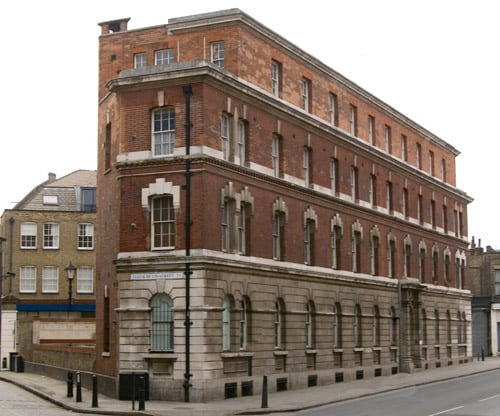
And so the incandescent baronet suffered the added indignity of being marched off to Commercial Street Police Station.
RELEASED WITH AN APOLOGY
Here it was agreed that word of his plight would be sent to his West End club, Brooks on St James’s Street, and it wasn’t long before confirmation came back that he was who he said he was, whereupon he was released with profuse apologies for the terrible mistake and any inconvenience that the zealousness of the constables might have caused him.
Since, as far as the police were concerned, his arrest had been a well-intentioned mistake, they saw no point in adding to Sir George’s woes by naming and shaming him to the newspapers, and they were more than willing to let the matter rest without any further damage to the young baronet’s reputation.
LEAKED TO THE PRESS
Unfortunately, the muddle that Sir George had gotten himself into soon became the talk of clubland, and as far as his fellow clubbers were concerned, such a story was simply too good to be kept amongst themselves, and they had no qualms about leaking the details of Sir George’s embarrassing East End escapade to the press.
By the last week of November, news of his calamitous nocturnal sojourn was appearing in newspapers in both Britain and America.
AN ARISTOCRATIC DETECTIVE IN TROUBLE
The Dundee Evening Telegraph, for example, on the 27th of November, under the above headline, informed readers that:-
“Sir George Arthur will hesitate ere he reconnoitres Whitechapel again.
An Astrachan overcoat would, he thought, be useful in protecting him from the cold. It was, but it incomprehensibly created suspicion.
Soon this led to his arrest; that to his conveyance to the nearest police station. There he had to give a faithful and particular account of his recent movements before he was released.
Aristocratic detectives had better label themselves if they wish to escape this inconvenience.”
A LITTLE LIGHT RELIEF
Thus it was that Sir George Compton Archibald Arthur’s embarrassing episode provided the people of Victorian Britain with some much-needed light-hearted relief from the horrors of the Whitechapel murders with which they had been confronted day after day for the past three months.
However, as far as the aristocratic amateur actor who found himself the inadvertent protagonist of the story was concerned, this was one role that he, no doubt, wished he had never taken on.